
When I queried my first manuscript, a political satire, one of the first things I noticed was that many literary agents don’t consider humour or satire a separate genre. I often found humour in the nonfiction genre. I should have known then that I was going down the road of misery and frustration.
There are some great, funny novels, but there are also very few to choose from. Many theories explain why this is so, but the concrete reason is in dispute. I have my theories.
There is no agreement on what is funny

I consider John Kennedy Toole’s Pulitzer Prize-winning novel The Confederacy of Dummies to be one of the funniest books ever written. Many people enjoyed the book, but 9% of Amazon ratings were fewer than three stars. One person recommended that you “avoid this book at all costs.” Someone called it the “world’s longest suicide note,” referring to the fact that the author killed himself before the book was published.
You need to read some of the comments to my jokes on Twitter to understand how different people perceive humour. Every so often, I add a disclaimer to my joke tweets (which in itself is humour), but the negative comments persist.
There are different forms of humour
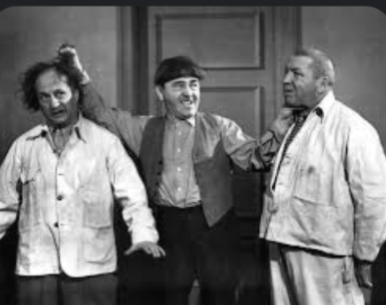
Now, part of the reason that there is no agreement on what is funny is that humour has a wide range of categories. There is satire, which is often in the form of social commentary. Examples include George Orwell’s Animal Farm and Saturday Night Live. There is physical comedy which includes the Three Stooges, Marx Brothers and films like National Lampoon’s Christmas Vacation. Dark comedy is the style of humour often employed by the Coen Brothers or the works of Kurt Vonnegut. Parodies spoof existing works. The film Airplane! spoofs a slew of disaster films. These and other humour categories often appeal to different audiences. I can’t help but notice how one person will find something hysterically funny, the next person will shrug their shoulders, and a third person will cringe.
Cultural differences in humour perception

Although humour is a universal phenomenon, it is also culturally tinted. Researchers have concluded that Easterners and Westerners differ in humour perception. For centuries, going back to ancient Greece, eastern cultures have embraced humour. In sharp contrast, eastern cultures’ attitudes toward humour are not that positive. The Chinese self-actualization denigrates humour while stressing restriction and seriousness. The Chinese do not think that humour is a desirable personality trait. Cultural difference in humour perception directly influences humour usage. In Western culture, humour has become an indispensable coping strategy. However, humour is not an important coping device in China or Japan. I find Canadian humour to be distinctively different from what exists in other Western cultures.
What does this all mean?
Although humour exists universally, it exists in many different forms, and how it is perceived can differ considerably. As a result, humour novels are a niche market and attract a smaller group of writers than romance or fantasy. Does that mean I would turn my back on writing funny books? No, but I accept that I have to work hard at finding an audience for my books.
 williehandler.com